Tampilkan postingan dengan label automatic pool cleaner us. Tampilkan semua postingan

Senin, 21 April 2014

I have some questions about my pool?

Q. I have some questions about my pool?
We bought a new house with a in ground pool........ We had the professionals come and get our pool going for the summer . They put the filter together got it running and added the shock. They told us a lot of info about maintaining it but I am still kinda confused. The pool looks pretty clear at this point . Here are my questions .
1 when I vacuum in the beginning when there is a lot of debree do I always have to back wash my filter ?
2 when I do backwash do I always have to add more DE to the filter through the skimmer . ( 6 cups he said ) but 6 cups every time ?
3 Do I do the backwash and then do the rinse cycle ?
4 There is an automatic chlorinator do I need to put the tablets in and it will do the rest or do I have to set it up ? was there chlorine in the shock so I don't add more ?
5 We have the ph plus and ph minus chemicals do I add the chlorine then check the levels and adjust in according to that ? PH is dealing with the chlorine levels rite ?
Any info would be appreciated thanks


Answer
Here ya go:
You should know what back washing is. In your filter you have screens. The openings in the screens are not small enough to thoroughly filter the water so the water stays clear. You add diatomaceous earth (DE). DE is large enough to catch on the filter screens while allowing openings that are so small that they create a better filter for the water. The filter screens are coated with DE. Water passes through the DE & is, assuming the chemicals are correct, very clean.

When you back wash, you turn the pump off & adjust the valves. Valves control the direction of the flow of water & by adjusting the valves you reverse the flow of water through the filters. By reversing the flow of water, the water washes the DE off the pool filters & the "dirty" DE is washed out of the system.

1. With regard to the effect of debris & back washing, the answer is "DEPENDS" and this is why. You only need to backwash when the pressure in your filter goes up about 6-8 pounds from the "new" back wash level. After you backwash, look at the pressure. Let's say it's at 12 pounds. When the pressure gets up to 18 to 20 pounds, then backwash as that means that the DE is 'full' and can no longer filter the water.

2. Thus, after you back wash you must re-coat the filter screens. So, the answer to your question is YES. Tou will add, per what "he" said, 6 cups. When you add the DE, you'll have already re-adjusted the filter valves so the water is flowing in the normal direction. Add the DE through the skimmers by slowly pouring it into the water& stirring it up with your hand. You can also use a large bucket full of water. Pour the 6 cups of DE into the water in the bucket & stir the DE into the water. Then simply pour the solution into a skimmer. DO NOT put the DE directly into the pool as it will settle to the bottom of the pool & not get into the filters.

3. Back washing & rinsing are the same thing.

4. Yes, you need to put tablets in the automatic chlorinator. If you shocked the pool (shock is really just a ton of chlorine), wait to refurbish the chlorinator as the chlorine levels of the pool will be very high. You should monitor the chlorine level of the pool and when it gets down to around 3.0 then start putting the tablets in chlorinator. Maintain chlorine levels as close to 1.0 to 2.0 as possible.

5. If you are using chlorine tablets the pH of the pool will rise. When the pH rises you risk the accumulation of a scale or calculus inside of the pipes. If enough scale accumulates it can actually plug up the pipes. To counter that rise you add acid which lowers the pH. Ideal pH levels are from 7.2 to 7.4.

You can buy the acid in most stores. It is called MURIATIC ACID (acid) and is probably cheaper than buying the product called pH MINUS. If the pH of the pool gets too low then the water is becoming acidic and that can oxidize (or corrode) the pipes. That, of course, would be a very expensive repair as would be the repair from scale build up from high pH. Although a change in pH is caused by chlorine it is not a measure of the chlorine. Both levels (chlorine and pH) must be monitored & adjusted as needed.

With regard to using liquid acid vs. pH minus ...The pH minus is a bit safer to use as it comes in a granulated form as opposed to a liquid. Acid should also be added ONLY to the deep end of the pool as when added to the shallow end it might not get diluted quickly enough & by the time it reaches the bottom of the pool it is still so strong it can etch the plaster. When adding acid to the deep end, pour a small steady stream into the water while walking around the pool. It's easy to do.

Personally, I used acid. It is easy to pour out of a bottle. Start off using small amounts as you can always add more. Wait an hour after the pour and test the pH. Plus acid is MUCH much less expensive than pH minus. The acid is also more easily available as it is frequently sold in grocery stores & home improvement stores as well as pool supply stores where, pH minus is rarely sold in many stores. If you were to get acid on your skin, all you do is step into the pool & rinse your skin. Just keep it away from the kids.

The only reason you'd need to have pH Plus around would be in case you put too much acid (or pH minus) in the pool & you need to balance the pH. However, you can also use a powder called SODA ASH, which HUGELY less expensive, instead of pH plus.

One last thing, don't be frightened by what I've said about using the acid & it eating up the pipes. It takes a number of repetitions over years of abuse for the pipes to be dramatically effected.

how to clean my pool at home with only the cleaning tablets.?


mom


i have a 12'x30" pool it holds 1,718 gallons of water.the pump filters 530 gallons of water per hour. the pool by morning is green and slimmy. the bottom of the pool is covered in green and brown crud?


Answer
Cleaning your pool is a must to ensure bather comfort and protect your equipment. How to clean your pool is simple, and we've asked pool professional John Kistler to fill us in on the whys of pool cleaning.
Instructions
Difficulty: Moderately Easy

Steps:

Step 1 Use a manual brush and pool vacuum on all areas of the walls and floor at least once a week, even if your pool is equipped with an automatic system, says John Kistler of Sunflower Pool & Spa in Salina, Kansas. There are some places in every pool that the automatic cleaning systems miss.

Step 2 Pay particular attention to corners, stairs and other hard-to-reach areas that get little circulation.

Step 3 Keep your pool maintained. A clean pool is also a function of a working filtration system and proper pH levels. Use a sanitizer to help fight bacteria, and shock the pool on a regular basis (see How to Shock a Pool) to help keep it clean and crystal-clear.


Powered by Yahoo! Answers

Minggu, 01 Desember 2013

i just bought an intex above ground pool, it is 16' by 48'' and i was wondering what chemicals do i need to...

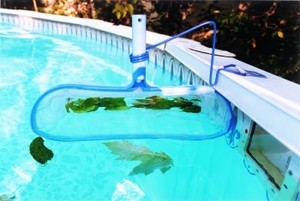
automatic pool cleaner us on Skimit Swimming Pool Automatic Skimmer Surface Cleaner | eBay
automatic pool cleaner us image


xsoolovely


maintain the pool. And how many chemicals do i need? =] thankss


Answer
The first thing you should do is shock your pool (you can buy chlorine shock at the store, it's basically just a high dosage of chlorine to kill bacteria and clean the water). Next, you should add stabilizer. Stabilizer will give your chlorine something to bond to so it doesn't evaporate so quickly.

This will take a few days to dissolve. Do you have floating chemical dispenser or an automatic chlorinator? Either way, fill it with chlorine pucks or tablets (they work the same way, they're just different sizes depending on how big your dispenser is).

Then you need to keep testing your water. If your chlorine levels get too high, then add less pucks or turn down the dispenser/chlorinator. If the chlorine gets too low, add more pucks or turn the unit up. If your pH gets too high or too low, you need to add some pH decreaser or pH increaser. If your alkalinity gets too low, add total alkalinity increaser. If your alkalinity gets a little high, use pH decreaser - if it gets extremely high, use muriatic acid.

It's hard for us to tell you how many chemicals you need. Everyone needs a different amount, depending on their water chemistry, amount of water their pool holds, how well they care for their pool, etc. Your basics are shock (do once a week and wait 24 hours before swimming), stabilizer, and chlorine pucks or tablets. You should also buy some test strips to test your water quickly at home, to see how your chlorine/pH/alkalinity levels are doing. Then you should buy and add more chemicals according to what your readings are telling you.

If this gets too confusing, you can always bring a sample of your water in an old water bottle to your local pool store. Most do free water testing, and they can tell you exactly which chemicals and how much of those chemicals you should add.

what is the single greatest use for salt?


Haley


Answer
there are actually many great uses of salt which benefits us in many ways like:

ALUMINIUM PURIFICATION Salt is used as a flux. The salt sits on top of the molten aluminium in molten salt form, this removes iron and other metals from aluminium leaving pure metal.

BREAD AND PASTRY Salt is used to give added flavour to bread and pastry. The main requirement here is that the product, either flossy or superfine, is clean and free from any extraneous matter. Salt also performs a function in controlling the rate at which the yeast works in the dough, giving a better texture to the bread.


CANNING OF MEAT AND VEGETABLES Salt is added to the products during processing and it is essential in these cases that the salt be free of grit, and particularly free of any specks or iron particles as these show up in the finished product.

CAUSTIC/CHLORINE MANUFACTURE The conversion of salt to form caustic soda and chlorine requires a crude salt with very high chemical purity. Salt is dissolved to form brine and the impurities are removed chemically before the brine passes into the electrolytic cells.

CHEESE MANUFACTURE Most cheese today is made on automatic machines and salting must be carried out in a continuous process. The salt used must be extremely dry at all times and contain virtually no fines beyond 60 mesh.

DRILLING Salt is used to mix with boring mud which is pumped down bore holes to form a wall when drilling through gravel or sandy material which will not stand up on its own.

FISH & MEAT CURING This is usually carried out by dissolving salt to form a strong brine to act as a pickle. The products may be placed in the pickle, or in many cases the pickle is pumped into the actual meat (such as in the case of bacon and ham). Salt for these purposes should be refined grades, clean and of high quality.

GENERAL COOKING Fine salt is used for all sorts of cooking and is similar to table salt, without the addition of Sodium Silico Aluminate.

HIDE CURING Hides and sheep skins are normally salted with a reasonably low quality salt. Hide salts are usually only washed grades but contain certain additives such as boric acid, to keep the hide as light a colour as possible. Other additives are naphthalene and sodium fluoride.

POTTERY PRODUCTION Salt is used to form the very smooth glaze on clay tiles or pottery ware. After a kiln of tiles reaches a yellow to white heat, salt is then fed on to the fire. The salt vaporises and passes on to the surface of the tile, actually forming a glass surface.

SOAP & GLYCERINE MANUFACTURE Fats and oils are saponified by heating with caustic soda to produce soap and glycerine. The soap is "grained" or "salted out" from solution by adding salt or strong brine.

SWIMMING POOLS Swimming pool salt is designed specifically for use with salt pool chlorinators

SYNTHETIC RUBBER MANUFACTURE Synthetic rubber is produced in the form of white latex to which salt is added as an emulsifier. Salt for this purpose is in crude form, of medium quality.

TABLE SALT This is a specially prepared salt for domestic purposes, with small, even crystals. Sodium Silico Aluminate is added as a free flowing agent. Table salt also comes in iodised form.

TEXTILE DYEING Salt is added to the dye baths during the process mainly to make the dyes fast. Flossy salt is the grade most commonly used in this process.

WATER SOFTENING Salt is used in both industrial and home water softening units. The purpose being to regenerate the resins which pick up the objectionable salts in the normal water supply. Salt for this purpose is usually a washed or refined grade. A similar type of salt is used for making a brine for brine cooling systems.

OTHER USES Other uses of salt include butter manufacture, soil stabilisation, tempering of steel, fertilisers and weed killers, and pine board manufacture.


Powered by Yahoo! Answers

Sabtu, 23 November 2013

What is the difference between chlorine demand, and chlorine residual?

automatic pool cleaner us on POOL CLEANER PAC02
automatic pool cleaner us image


Sophia Kra


In regards to a swimming pool


Answer
High chlorine demand is the inability to keep adequate chlorine in pool water, even though the water is balanced and properly maintained. Various contaminants increase oxidation levels, consuming chlorine faster than it can be replaced by automatic feeders or normal shocking. Symptoms can include slimy or slick pool walls and cloudy water, although water can be clear and still have a high chlorine demand. A sudden drop in cyanuric acid can be an indicator that there is a chlorine demand problem, as the CYA reading is often masked by the demand. If this occurs, do not add stabilizer. Another form of chlorine demand is a high level of combined chlorine that cannot be broken by successive shock applications. Often this is caused by the presence of ammonia in the water. This can come from fertilizers, pesticides, and even fill water.


1.Free available chlorine (or RESIDUAL CHLORINE) - is the amount of chlorine in the pool that can sanitise or disinfect the water and is the important measurement for us.
2.Combined chlorine - consists of undesirable, bad-smelling, irritating compounds which form when there isn't enough free available chlorine.
3.Total chlorine - is the total amount of chlorine in the water. It includes both free available and combined chlorine.
We are interested in how much available chlorine there is in the water - chlorine that can act on foreign substances in the water to keep the pool clean and safe for the swimmers.

Too little chlorine results in algal and bacterial growth, waterborne illnesses, cloudy water and insufficient sanitation of the water.

Too much chlorine can result in eye, nose and skin irritations. Remember, too, that the chlorine in the pool is carcinogenic and we should aim to keep its level to the minimum required for complete disinfection.

Test kits which use tablets rather than liquid reagents are preferred. The tablets are easier to use and provide more accurate results. Also make sure that the chlorine measuring tablets are "DPD" as only these can measure the free available chlorine.

how to clean my pool at home with only the cleaning tablets.?


mom


i have a 12'x30" pool it holds 1,718 gallons of water.the pump filters 530 gallons of water per hour. the pool by morning is green and slimmy. the bottom of the pool is covered in green and brown crud?


Answer
Cleaning your pool is a must to ensure bather comfort and protect your equipment. How to clean your pool is simple, and we've asked pool professional John Kistler to fill us in on the whys of pool cleaning.
Instructions
Difficulty: Moderately Easy

Steps:

Step 1 Use a manual brush and pool vacuum on all areas of the walls and floor at least once a week, even if your pool is equipped with an automatic system, says John Kistler of Sunflower Pool & Spa in Salina, Kansas. There are some places in every pool that the automatic cleaning systems miss.

Step 2 Pay particular attention to corners, stairs and other hard-to-reach areas that get little circulation.

Step 3 Keep your pool maintained. A clean pool is also a function of a working filtration system and proper pH levels. Use a sanitizer to help fight bacteria, and shock the pool on a regular basis (see How to Shock a Pool) to help keep it clean and crystal-clear.


Powered by Yahoo! Answers
Kamis, 14 November 2013

We just bought a house with an above ground pool..cost of maintenance?

automatic pool cleaner us on The Water Duster Admiral Automatic Pool Cleaner
automatic pool cleaner us image


babagirls1


We just bought a house with an above ground pool (I think it's a 15 x 30 feet) and I was wondering what should we expect to do this summer for maintenance?

I know there's chemicals that have to be added & checked often to maintain the levels (chlorine, pH, algaecide), but other than chemicals, is it gonna cost us a lot of money for the upkeep?

We bought an automatic pool cleaner so we don't have to waste time cleaning it manually, and I'm buying the chemicals today, is there anything that I'm missing?

The previous owner of the house is coming over today to assemble the pump & etc, but I'm curious to see the answers here so that I know what to ask him.


Answer
You'll need a PH test kit. Once you have the kit and test the water everyday (it comes with a booklet) you'll know exactly what needs to be added to the water.

i just bought an intex above ground pool, it is 16' by 48'' and i was wondering what chemicals do i need to...


xsoolovely


maintain the pool. And how many chemicals do i need? =] thankss


Answer
The first thing you should do is shock your pool (you can buy chlorine shock at the store, it's basically just a high dosage of chlorine to kill bacteria and clean the water). Next, you should add stabilizer. Stabilizer will give your chlorine something to bond to so it doesn't evaporate so quickly.

This will take a few days to dissolve. Do you have floating chemical dispenser or an automatic chlorinator? Either way, fill it with chlorine pucks or tablets (they work the same way, they're just different sizes depending on how big your dispenser is).

Then you need to keep testing your water. If your chlorine levels get too high, then add less pucks or turn down the dispenser/chlorinator. If the chlorine gets too low, add more pucks or turn the unit up. If your pH gets too high or too low, you need to add some pH decreaser or pH increaser. If your alkalinity gets too low, add total alkalinity increaser. If your alkalinity gets a little high, use pH decreaser - if it gets extremely high, use muriatic acid.

It's hard for us to tell you how many chemicals you need. Everyone needs a different amount, depending on their water chemistry, amount of water their pool holds, how well they care for their pool, etc. Your basics are shock (do once a week and wait 24 hours before swimming), stabilizer, and chlorine pucks or tablets. You should also buy some test strips to test your water quickly at home, to see how your chlorine/pH/alkalinity levels are doing. Then you should buy and add more chemicals according to what your readings are telling you.

If this gets too confusing, you can always bring a sample of your water in an old water bottle to your local pool store. Most do free water testing, and they can tell you exactly which chemicals and how much of those chemicals you should add.


Powered by Yahoo! Answers

Senin, 28 Oktober 2013

I have some questions about my pool?

automatic pool cleaner us on Hayward phantom pool cleaner information
automatic pool cleaner us image


Jenny Ucke


I have some questions about my pool?
We bought a new house with a in ground pool........ We had the professionals come and get our pool going for the summer . They put the filter together got it running and added the shock. They told us a lot of info about maintaining it but I am still kinda confused. The pool looks pretty clear at this point . Here are my questions .
1 when I vacuum in the beginning when there is a lot of debree do I always have to back wash my filter ?
2 when I do backwash do I always have to add more DE to the filter through the skimmer . ( 6 cups he said ) but 6 cups every time ?
3 Do I do the backwash and then do the rinse cycle ?
4 There is an automatic chlorinator do I need to put the tablets in and it will do the rest or do I have to set it up ? was there chlorine in the shock so I don't add more ?
5 We have the ph plus and ph minus chemicals do I add the chlorine then check the levels and adjust in according to that ? PH is dealing with the chlorine levels rite ?
Any info would be appreciated thanks


Answer
Here ya go:
You should know what back washing is. In your filter you have screens. The openings in the screens are not small enough to thoroughly filter the water so the water stays clear. You add diatomaceous earth (DE). DE is large enough to catch on the filter screens while allowing openings that are so small that they create a better filter for the water. The filter screens are coated with DE. Water passes through the DE & is, assuming the chemicals are correct, very clean.

When you back wash, you turn the pump off & adjust the valves. Valves control the direction of the flow of water & by adjusting the valves you reverse the flow of water through the filters. By reversing the flow of water, the water washes the DE off the pool filters & the "dirty" DE is washed out of the system.

1. With regard to the effect of debris & back washing, the answer is "DEPENDS" and this is why. You only need to backwash when the pressure in your filter goes up about 6-8 pounds from the "new" back wash level. After you backwash, look at the pressure. Let's say it's at 12 pounds. When the pressure gets up to 18 to 20 pounds, then backwash as that means that the DE is 'full' and can no longer filter the water.

2. Thus, after you back wash you must re-coat the filter screens. So, the answer to your question is YES. Tou will add, per what "he" said, 6 cups. When you add the DE, you'll have already re-adjusted the filter valves so the water is flowing in the normal direction. Add the DE through the skimmers by slowly pouring it into the water& stirring it up with your hand. You can also use a large bucket full of water. Pour the 6 cups of DE into the water in the bucket & stir the DE into the water. Then simply pour the solution into a skimmer. DO NOT put the DE directly into the pool as it will settle to the bottom of the pool & not get into the filters.

3. Back washing & rinsing are the same thing.

4. Yes, you need to put tablets in the automatic chlorinator. If you shocked the pool (shock is really just a ton of chlorine), wait to refurbish the chlorinator as the chlorine levels of the pool will be very high. You should monitor the chlorine level of the pool and when it gets down to around 3.0 then start putting the tablets in chlorinator. Maintain chlorine levels as close to 1.0 to 2.0 as possible.

5. If you are using chlorine tablets the pH of the pool will rise. When the pH rises you risk the accumulation of a scale or calculus inside of the pipes. If enough scale accumulates it can actually plug up the pipes. To counter that rise you add acid which lowers the pH. Ideal pH levels are from 7.2 to 7.4.

You can buy the acid in most stores. It is called MURIATIC ACID (acid) and is probably cheaper than buying the product called pH MINUS. If the pH of the pool gets too low then the water is becoming acidic and that can oxidize (or corrode) the pipes. That, of course, would be a very expensive repair as would be the repair from scale build up from high pH. Although a change in pH is caused by chlorine it is not a measure of the chlorine. Both levels (chlorine and pH) must be monitored & adjusted as needed.

With regard to using liquid acid vs. pH minus ...The pH minus is a bit safer to use as it comes in a granulated form as opposed to a liquid. Acid should also be added ONLY to the deep end of the pool as when added to the shallow end it might not get diluted quickly enough & by the time it reaches the bottom of the pool it is still so strong it can etch the plaster. When adding acid to the deep end, pour a small steady stream into the water while walking around the pool. It's easy to do.

Personally, I used acid. It is easy to pour out of a bottle. Start off using small amounts as you can always add more. Wait an hour after the pour and test the pH. Plus acid is MUCH much less expensive than pH minus. The acid is also more easily available as it is frequently sold in grocery stores & home improvement stores as well as pool supply stores where, pH minus is rarely sold in many stores. If you were to get acid on your skin, all you do is step into the pool & rinse your skin. Just keep it away from the kids.

The only reason you'd need to have pH Plus around would be in case you put too much acid (or pH minus) in the pool & you need to balance the pH. However, you can also use a powder called SODA ASH, which HUGELY less expensive, instead of pH plus.

One last thing, don't be frightened by what I've said about using the acid & it eating up the pipes. It takes a number of repetitions over years of abuse for the pipes to be dramatically effected.

Could You Help Me Open My Pool?


Brooke


See, we just moved and the pool hasn't been opened for like 10 years. My dad and I are trying to get it to clear up, but we just can't get it! When we first took the tarp of, it was coal black.

The filter's running and we put in some shock so it's starting to clear up. My dad put some algie killer in the pool. Now it's all white and swirly.

We have found frogs and snails living in the water.

We can't drain the pool because it's inground and if we do, it will pop up.

So, how can we get the water cleared? Please help. And can you also tell us how long it would take?

There's water under the pool that will cause it to pop up if we drain it.

And we don't want to pay someone. My dad has it set he wants to do it himself.


Answer
First, clean out the skimmers, the basket by the pump, and the filters. Keep the pump running and let the water clear until you can see the bottom. If it doesn't clear in a day or so, go to the pool supply store and get some clarifier. Then use a "leaf rake" on the end of your extension pole to scoop up all the leaves and junk from the bottom of the pool. Once the junk is out of the pool and the water's clear take a water sample to the pool supply store and they will test it for free and tell you what to do to balance the chemicals. You can catch the frogs with the leaf rake and relocate them. A pool brush on the end of the pole with dislodge any snails, scale, and stuff clinging to the sides and bottom.

Once you've got it clear, clean, and balanced you'll need to test the water weekly, maintain the skimmers and filters, and brush it once in a while. If you don't have an automatic pool sweep you need to get a vacuum and use it weekly. Pick one day a week and do your maintenance every week on that day. Wednesday works for me, but that fits my schedule.

We love our pool and spa. We live in North Texas and get to use it longer than many parts of the country. We never shut it down, just cut back on chemicals in the dead of winter. We use the spa year 'round. Good luck with yours. Once it's clean it doesn't take much to keep it going.


Powered by Yahoo! Answers

Kamis, 08 Agustus 2013

how to clean my pool at home with only the cleaning tablets.?

automatic pool cleaner us on robotic pool cleaner - above ground - NITRO Smartkleen
automatic pool cleaner us image


mom


i have a 12'x30" pool it holds 1,718 gallons of water.the pump filters 530 gallons of water per hour. the pool by morning is green and slimmy. the bottom of the pool is covered in green and brown crud?


Answer
Cleaning your pool is a must to ensure bather comfort and protect your equipment. How to clean your pool is simple, and we've asked pool professional John Kistler to fill us in on the whys of pool cleaning.
Instructions
Difficulty: Moderately Easy

Steps:

Step 1 Use a manual brush and pool vacuum on all areas of the walls and floor at least once a week, even if your pool is equipped with an automatic system, says John Kistler of Sunflower Pool & Spa in Salina, Kansas. There are some places in every pool that the automatic cleaning systems miss.

Step 2 Pay particular attention to corners, stairs and other hard-to-reach areas that get little circulation.

Step 3 Keep your pool maintained. A clean pool is also a function of a working filtration system and proper pH levels. Use a sanitizer to help fight bacteria, and shock the pool on a regular basis (see How to Shock a Pool) to help keep it clean and crystal-clear.

Urgent!!! we moved in a new house and it has above ground pool, actually ...?


lala


only a frame of the pool with a desk half way around it. the Inspector came inand told us eather to take it out or fill it with water. I need help desiding what would be easier and cheaper. to take the pool out and redo the deck or buy all the needed thing for runing a pool. Also I have no clue on taking care of the pool cleanig, the chemicals and all that.
sorry for my bad spelling,, I didn't reread what I wrote..:-/
also any of you know any stores in St.Louis MO area where I can go look at the prices and ask more questions?


Answer
i'm kinda lost bout your question but i do know how to clean a pool!
depending on it's size, when you first open it you wanta add a bit of chlorine...it's also good to get one of those little things that float around in the water, and that hold chlorine tablets.
after a little while your water may become foggy, so it would be good to add pool shock... uhmm... lets see what else...

a solar cover would a good investment too, it basically heats your water...
if it's kind of a big sized pool.. you might want a pool cleaner...

http://www.intheswim.com/Pool-Equipment/Automatic-Pool-Cleaners-for-Above-Ground-Pools/Polaris-65-Automatic-Pool-Cleaner/

that's the type of system i have.

another really good thing to have is a pool water testing kit
it will test the ph level and chlorine level, they'll run you about $10

i know this stuff seems kind of expensive, but the only stuff you'll ever have to buy repeditively are pool chemicals


Powered by Yahoo! Answers

Selasa, 09 Juli 2013

I have a rock under my pool liner?

automatic pool cleaner us on The Aquamax - The Original Cleaner For Commercial Swimming Pools By ...
automatic pool cleaner us image


iamasurvey


We bought an above ground pool and installed it ourselves. It took us 5 tries but we finally got it up and filled and then noticed that there is a pointy rock about the size of a 50 cent piece sticking up under the liner. I have no idea how we missed it but we did so now we don't know what to do! We are afraid to try and push it down because it's probably going to poke a hole in the liner.. Does anyone have any ideas on what to do with it? We have 6 kids so I'm sure if we leave it in there its going to eventually get a hole there with the kids walking on it all the time. Its a 24' x 52" pool so we really don't want to drain it and start over, cause like I said this is the 5th time and 2 other times we had it half full and had to drain it. Someone please help!!!


Answer
Couple of options.
1/ New liner and new install so it's not going to be a hardship on that liner to drain it, crawl under from a convenient spot, grab that offending rock , retrace your crawl and smooth the bottom as you retreat.
2/ Live with it until it holes. Unpleasant for the feet and will happen sooner if you have an automatic pool cleaner.
3/ Bite the bullet and grab a knife. Have a patch kit and liner sample large enough to to the patch. Slice at the rock, grab it and apply your patch quickly so that your sand bottom doesn't start creating a channel as it erodes.

I have some questions about my pool?


Jenny Ucke


I have some questions about my pool?
We bought a new house with a in ground pool........ We had the professionals come and get our pool going for the summer . They put the filter together got it running and added the shock. They told us a lot of info about maintaining it but I am still kinda confused. The pool looks pretty clear at this point . Here are my questions .
1 when I vacuum in the beginning when there is a lot of debree do I always have to back wash my filter ?
2 when I do backwash do I always have to add more DE to the filter through the skimmer . ( 6 cups he said ) but 6 cups every time ?
3 Do I do the backwash and then do the rinse cycle ?
4 There is an automatic chlorinator do I need to put the tablets in and it will do the rest or do I have to set it up ? was there chlorine in the shock so I don't add more ?
5 We have the ph plus and ph minus chemicals do I add the chlorine then check the levels and adjust in according to that ? PH is dealing with the chlorine levels rite ?
Any info would be appreciated thanks


Answer
Here ya go:
You should know what back washing is. In your filter you have screens. The openings in the screens are not small enough to thoroughly filter the water so the water stays clear. You add diatomaceous earth (DE). DE is large enough to catch on the filter screens while allowing openings that are so small that they create a better filter for the water. The filter screens are coated with DE. Water passes through the DE & is, assuming the chemicals are correct, very clean.

When you back wash, you turn the pump off & adjust the valves. Valves control the direction of the flow of water & by adjusting the valves you reverse the flow of water through the filters. By reversing the flow of water, the water washes the DE off the pool filters & the "dirty" DE is washed out of the system.

1. With regard to the effect of debris & back washing, the answer is "DEPENDS" and this is why. You only need to backwash when the pressure in your filter goes up about 6-8 pounds from the "new" back wash level. After you backwash, look at the pressure. Let's say it's at 12 pounds. When the pressure gets up to 18 to 20 pounds, then backwash as that means that the DE is 'full' and can no longer filter the water.

2. Thus, after you back wash you must re-coat the filter screens. So, the answer to your question is YES. Tou will add, per what "he" said, 6 cups. When you add the DE, you'll have already re-adjusted the filter valves so the water is flowing in the normal direction. Add the DE through the skimmers by slowly pouring it into the water& stirring it up with your hand. You can also use a large bucket full of water. Pour the 6 cups of DE into the water in the bucket & stir the DE into the water. Then simply pour the solution into a skimmer. DO NOT put the DE directly into the pool as it will settle to the bottom of the pool & not get into the filters.

3. Back washing & rinsing are the same thing.

4. Yes, you need to put tablets in the automatic chlorinator. If you shocked the pool (shock is really just a ton of chlorine), wait to refurbish the chlorinator as the chlorine levels of the pool will be very high. You should monitor the chlorine level of the pool and when it gets down to around 3.0 then start putting the tablets in chlorinator. Maintain chlorine levels as close to 1.0 to 2.0 as possible.

5. If you are using chlorine tablets the pH of the pool will rise. When the pH rises you risk the accumulation of a scale or calculus inside of the pipes. If enough scale accumulates it can actually plug up the pipes. To counter that rise you add acid which lowers the pH. Ideal pH levels are from 7.2 to 7.4.

You can buy the acid in most stores. It is called MURIATIC ACID (acid) and is probably cheaper than buying the product called pH MINUS. If the pH of the pool gets too low then the water is becoming acidic and that can oxidize (or corrode) the pipes. That, of course, would be a very expensive repair as would be the repair from scale build up from high pH. Although a change in pH is caused by chlorine it is not a measure of the chlorine. Both levels (chlorine and pH) must be monitored & adjusted as needed.

With regard to using liquid acid vs. pH minus ...The pH minus is a bit safer to use as it comes in a granulated form as opposed to a liquid. Acid should also be added ONLY to the deep end of the pool as when added to the shallow end it might not get diluted quickly enough & by the time it reaches the bottom of the pool it is still so strong it can etch the plaster. When adding acid to the deep end, pour a small steady stream into the water while walking around the pool. It's easy to do.

Personally, I used acid. It is easy to pour out of a bottle. Start off using small amounts as you can always add more. Wait an hour after the pour and test the pH. Plus acid is MUCH much less expensive than pH minus. The acid is also more easily available as it is frequently sold in grocery stores & home improvement stores as well as pool supply stores where, pH minus is rarely sold in many stores. If you were to get acid on your skin, all you do is step into the pool & rinse your skin. Just keep it away from the kids.

The only reason you'd need to have pH Plus around would be in case you put too much acid (or pH minus) in the pool & you need to balance the pH. However, you can also use a powder called SODA ASH, which HUGELY less expensive, instead of pH plus.

One last thing, don't be frightened by what I've said about using the acid & it eating up the pipes. It takes a number of repetitions over years of abuse for the pipes to be dramatically effected.


Powered by Yahoo! Answers